Quick answer: NDIS lawn mowing and gardening on the Sunshine Coast can be funded when your disability makes yard upkeep difficult or unsafe. It is claimed from your Core Supports (Assistance with Daily Life) budget under House or Yard Maintenance (01_019_0120_1_1), with a 2026–27 price limit of $59.01 per hour in standard areas. Humming Home Services is an NDIS registered provider offering regular mowing, weeding, hedging and green waste removal from the coast to the hinterland.
Published 18 October 2026 · Written by the Humming Home Services gardening team · Reviewed for 2026–27 NDIS pricing
A tidy yard on the Sunshine Coast is about more than kerb appeal. When the grass shoots up after summer storms, a path can disappear under overgrowth in a couple of weeks. For many NDIS participants, that means trip hazards, blocked ramps and a garden that feels like a source of stress instead of a place to relax.
This guide explains how NDIS lawn mowing and gardening works on the Sunshine Coast: what is funded, what it costs in 2026–27, how often coastal and hinterland yards need attention, and how to book a reliable, NDIS registered gardener.
In this guide
- Does the NDIS pay for lawn mowing?
- How to get gardening into your plan
- What NDIS gardening includes
- NDIS lawn mowing cost on the Sunshine Coast
- Why Sunshine Coast gardens need extra care
- How often your lawn needs mowing
- Areas we cover
- How to choose an NDIS gardener
- What happens during a visit
- Making your yard safer
- For support coordinators and plan managers
- How booking works
- FAQs
Does the NDIS Pay for Lawn Mowing on the Sunshine Coast?
The NDIS can pay for lawn mowing and garden maintenance when the support is reasonable and necessary and related to your disability. In practice, that usually means:
- Your disability makes mowing, weeding or trimming difficult, painful or unsafe.
- No one in your household can reasonably do the work for you.
- The work keeps your home safe and accessible, for example clearing paths, entries and ramps.
- Your plan includes Core Supports funding that can be used for household tasks.
The NDIS looks at function and safety, not appearance. A yard that hides trip hazards or blocks access to your front door is a strong case for funding. Major landscaping or a cosmetic garden makeover usually is not. If you rent, check your lease, as some outdoor work such as large tree removal may be the landlord’s responsibility.
Not sure where to start? Our guide on using NDIS Core Supports in Queensland explains how household budgets work, and you can talk it through with your support coordinator.
How to Get NDIS Gardening Into Your Plan
If gardening isn’t in your plan yet, these steps can help:
- Raise it early. Tell your planner, local area coordinator or support coordinator that you need help with yard maintenance, ideally before your plan meeting or reassessment.
- Explain the impact. Describe what happens when the yard isn’t maintained, such as paths you can’t use safely, a ramp you can’t reach or falls you’ve had.
- Provide evidence. A functional assessment from an occupational therapist or a letter from your GP or allied health professional explaining why mowing or weeding is unsafe for you carries a lot of weight.
- Explain your informal supports. Let the NDIA know if family or housemates can’t reasonably do the work.
- Use your Core budget flexibly. Assistance with Daily Life funding is generally flexible, so you may be able to use it for household tasks including gardening. Check with your plan manager.
- If it’s declined, you can ask for an internal review of the decision within three months of receiving it.
Renting? In most Queensland tenancies, routine lawn mowing and garden upkeep is the tenant’s responsibility, which is why participants who rent often use NDIS funding for it. Large tree work and structural repairs usually fall to the landlord, so check your lease.
Want a quote for your yard? Book a garden visit or call 0478 534 064.
What Does NDIS Gardening on the Sunshine Coast Include?
Our gardeners adjust each visit to the season and to what keeps your home safe and comfortable. A typical service includes:
Lawn care and mowing
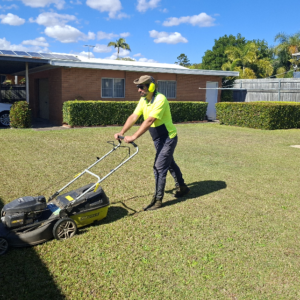
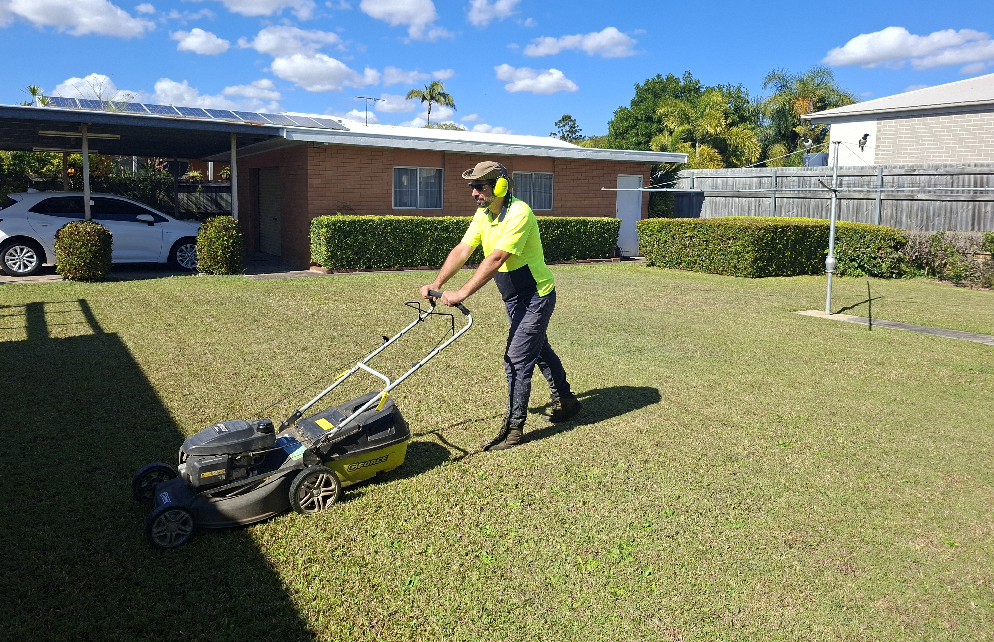
Mowing, edge trimming along paths and driveways, and cleaning up clippings so nothing is left to slip on.
Weeding and garden beds
Hand weeding, spreading mulch you supply, and keeping beds tidy so weeds don’t take over in the wet season.
Pruning and hedging
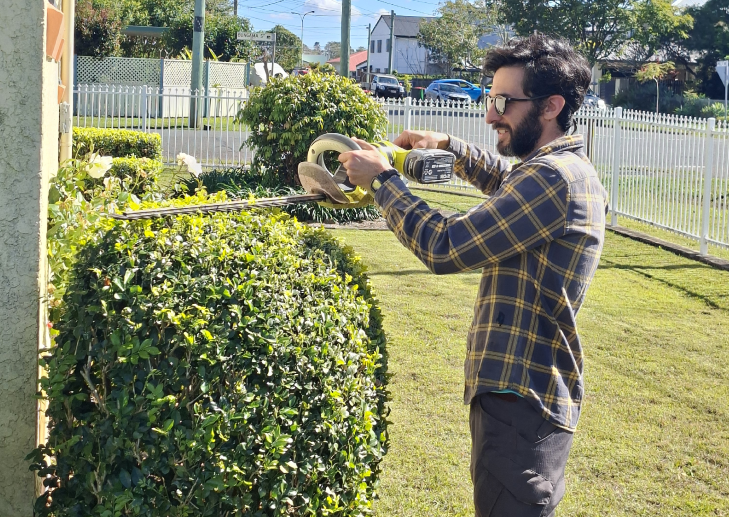
Trimming shrubs, hedges and low-hanging branches that block paths, windows or ramps.
Yard clearance and green waste
Clearing pathways, leaf blowing, removing green waste and picking up hazards after storms.
What’s usually not funded: plants, soil, fertiliser and mulch (you buy these, though we can help collect them), gardening tools, landscaping and structural work, and large tree removal. Large trees need a qualified arborist, and anything near power lines must be handled by Energex or an authorised contractor.
How Much Does NDIS Lawn Mowing Cost on the Sunshine Coast?
For 2026–27, the NDIS price limit for House or Yard Maintenance is $59.01 per hour in standard areas (MMM 1–5). Sunshine Coast homes, from the beaches to the hinterland, generally fall within this standard band, so $59.01 is the limit that usually applies. You can check your address on the Health Workforce Locator. These are maximum prices, and providers can charge less.
| Typical schedule | Cost per visit | Cost per year |
|---|---|---|
| 1.5 hours, fortnightly (small yard) | $88.51 | $2,301.26 |
| 2 hours, fortnightly (average yard) | $118.02 | $3,068.52 |
| 2 hours, seasonal schedule (weekly in summer, fortnightly in spring, every 3 weeks in autumn, monthly in winter: about 27 visits) | $118.02 | $3,186.54 |
| 3 hours, monthly (low-growth yard) | $177.03 | $2,124.36 |
Travel can be charged if it’s agreed in your service agreement. For a full breakdown of travel, cancellations and plan types, read our guide to NDIS cleaning rates for 2026–27.
Which plan types can use Humming?
We are an NDIS registered provider, so we can work with agency-managed, plan-managed and self-managed participants. Agency-managed participants must use a registered provider. Learn more in registered vs unregistered NDIS providers.
Why Sunshine Coast Gardens Need Extra Care
The Sunshine Coast’s subtropical climate is lovely to live in, but it keeps gardeners busy. A few local conditions shape how we plan your visits:
- Fast summer growth. Warm temperatures and heavy rain from late spring to early autumn make lawns and weeds grow quickly. A yard that looked fine two weeks ago can be overgrown after a run of wet days.
- Storm season. Summer storms bring strong winds and fallen branches. Clear paths and trimmed trees reduce the clean-up afterwards. Our storm season yard checklist covers what to do before the weather turns.
- Coastal conditions. Homes near the beach deal with sandy soil, salt air and wind. Hardy, low-maintenance plants and regular tidying help keep these gardens manageable.
- Hinterland slopes. Properties in the hinterland are often larger and steeper, with cooler, damper conditions. Slopes and wet grass make mowing riskier, which is why many participants prefer to have it done for them.
- Humidity and pests. Long, damp grass can hide snakes, ticks and mosquitoes. Paralysis ticks are common in leafy hinterland gardens. Keeping the lawn short near the house reduces these risks.
- Green waste. Wet-season growth creates a lot of clippings. We can bag green waste for your council green bin or take it away, whichever you prefer.
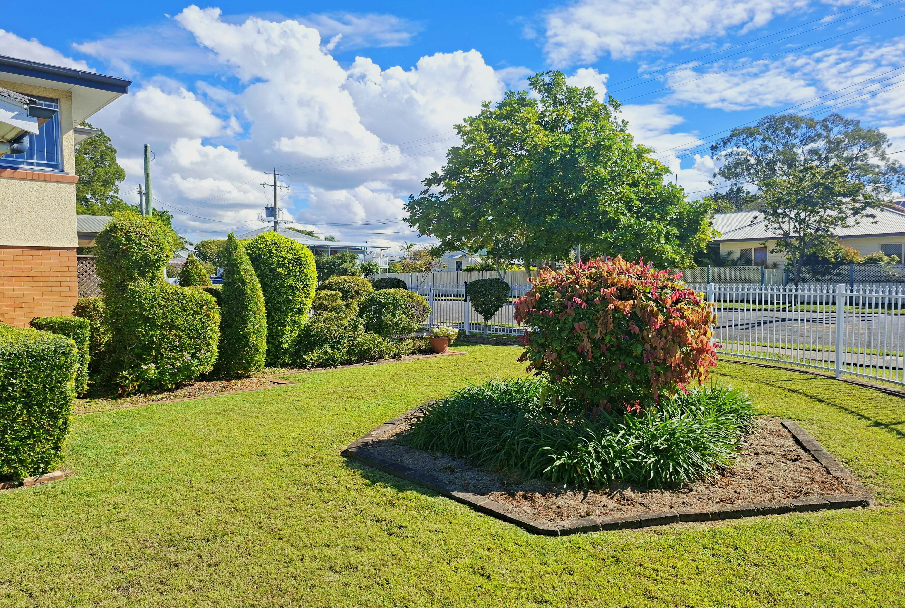
How Often Should Your Lawn Be Mowed on the Sunshine Coast?
Every yard is different, but this seasonal guide is a good starting point when planning NDIS gardening support with your support coordinator or plan manager.
| Season | What’s happening | Suggested visits |
|---|---|---|
| Summer (Dec–Feb) | Peak growth, storms and humidity | Every 1–2 weeks |
| Autumn (Mar–May) | Growth slows after the wet season | Every 2–3 weeks |
| Winter (Jun–Aug) | Slow growth, good time for pruning | Every 3–4 weeks |
| Spring (Sep–Nov) | Growth picks up, storm prep time | Every 2 weeks |
Budget tip: plan for more visits in summer and fewer in winter. That way, your yearly budget matches how your garden actually grows, and you avoid running short in the busiest months.
NDIS Lawn Mowing Across the Sunshine Coast: Areas We Cover
Our gardening team supports NDIS participants across the Sunshine Coast region, from the coast to the hinterland. Whether you live near the beach in suburbs like Caloundra, Mooloolaba, Maroochydore or Coolum, or inland around Nambour, Buderim or the hinterland towns, get in touch and we’ll confirm availability for your street.
We also provide NDIS gardening and cleaning in Greater Brisbane (including Moreton Bay, Logan, Ipswich and Redlands) and Toowoomba, Gatton and Laidley. See our full gardening and yard maintenance services. Comparing providers across all three regions? Read our guide to choosing an NDIS gardening provider in South East Queensland.
How to Choose an NDIS Gardener on the Sunshine Coast
Searching “NDIS lawn mowing near me” brings up directories, marketplaces and sole traders. Use these questions to compare providers:
- Are you NDIS registered? You’ll need a registered provider if your plan is agency-managed.
- Are your workers screened? Ask whether gardeners hold an NDIS Worker Screening Check. All Humming team members do, and they complete the NDIS Worker Orientation Module before starting.
- Will I have the same gardener? A regular worker learns your yard and your preferences.
- What’s included in each visit? Get the task list in writing, including green waste removal.
- Do you charge travel or cancellation fees? Make sure both are written in your service agreement.
- Is there a lock-in contract? Look for flexibility to change or pause services.
For more on comparing services, read how to compare home services and find reliable NDIS support.
“I planted everything in my garden, and since I’m unable to attend to it any more, Humming has been maintaining it for me for nearly 8 years. I trust Jack and Jorge with my dear garden, and I keep getting lots of compliments for it!”
Helen, Humming gardening client in Brisbane
What Happens During an NDIS Lawn Mowing Visit?
Knowing what to expect makes the first visit easier, especially if you haven’t had a gardener before. Here is how a regular visit with Humming usually runs:
- Arrival and check-in. Your gardener arrives at the agreed time, says hello if you’re home, and checks for anything new since the last visit, such as a loose pot, a wasp nest or a soft patch of ground.
- Safety first. They walk the yard to remove sticks, toys, hoses and other items that could be caught by the mower.
- Mowing and edging. The lawn is mowed to a height that suits the season, and edges along paths, driveways and garden beds are trimmed.
- Garden beds and hedges. Weeds are pulled, and shrubs or branches blocking paths, windows or ramps are cut back.
- Clean-up. Clippings are blown off paths and patios, and green waste is bagged or removed as agreed.
- Quick handover. Your gardener lets you know about anything that needs attention, such as a broken paver or a tree that needs an arborist.
You don’t need to be home. If you’d prefer to go out, we just need safe access to the yard and gate.
Making Your Yard Safer and More Accessible
Good garden maintenance supports independence. When we plan your service, we look for small changes that make a big difference to how safely you can move around your home:
- Clear, wide paths to the front door, clothesline, bins and car, with no overhanging branches at head height.
- Short grass near ramps and steps, so wheels and walking frames don’t catch.
- Tidy edges that show where the path ends and the garden begins, which helps people with low vision.
- Leaf-free paths and patios, which become slippery after rain.
- Low-maintenance garden beds with mulch and hardy plants, so the yard stays manageable between visits.
For Support Coordinators and Plan Managers
We make referrals simple. Send us the participant’s details, plan management type, service address and any access or communication needs, and we’ll arrange a call or home visit to set up the service agreement. We invoice against House or Yard Maintenance (01_019_0120_1_1) at or below the 2026–27 price limit, itemise every invoice by date and hours, and let you know early if a participant’s funding looks like it will run short before their plan ends.
How to Book NDIS Gardening on the Sunshine Coast
- Reach out. Fill in our online referral form or call us. Support coordinators and plan managers can refer on your behalf.
- Plan your service. We’ll have a quick chat or visit your home to map out your needs, schedule and budget, and create a service agreement together.
- Meet your gardener. We match you with a friendly, screened team member who fits your schedule.
- Enjoy a safer yard. Your gardener visits on a regular schedule, and we adjust it with the seasons.
Frequently Asked Questions
Does the NDIS pay for lawn mowing on the Sunshine Coast?
Yes, if it is reasonable and necessary and your disability makes it hard to do yourself. It is funded under House or Yard Maintenance in your Core Supports budget.
What is the NDIS rate for gardening in 2026–27?
The price limit for House or Yard Maintenance (01_019_0120_1_1) is $59.01 per hour in standard areas from 1 July 2026.
Do I need to buy my own mulch and plants?
Yes. Materials like mulch, soil and plants are not usually funded. We can help pick them up and spread them as part of your visit.
Do I need to be home during the gardening visit?
No. You can stay home or go out. We just need safe access to the yard.
Can Humming remove fallen trees after a storm?
We can clear small branches and green waste. Large fallen trees, damaged structures and anything near power lines need an arborist, tradesperson or the SES (132 500).
Can I use NDIS gardening if I’m plan-managed?
Yes. Plan-managed participants can use registered or unregistered providers, and your plan manager pays our invoices directly.
How much does NDIS lawn mowing cost per year on the Sunshine Coast?
At the 2026–27 price limit of $59.01 per hour, the typical schedules in our cost table work out to roughly $2,100 to $3,200 a year, depending on yard size and how often it’s mowed.
How do I add gardening to my NDIS plan?
Raise it with your planner or support coordinator, explain how your disability affects yard upkeep, and provide supporting evidence such as an occupational therapy assessment.
Book a Garden Visit on the Sunshine Coast
Humming Home Services is a family-owned NDIS registered provider supporting Queensland homes since 2018. Our screened gardeners help keep your yard safe, tidy and easy to enjoy all year round.
Sources and Further Reading
- NDIS Pricing Arrangements and Price Limits (NDIA)
- Our Guidelines: reasonable and necessary supports (NDIS)
- Health Workforce Locator (Modified Monash Model) (Australian Government)
- Prepare for natural disasters (QBCC)
This article is general information, not NDIS planning advice. Funding decisions are made by the NDIA based on your plan and circumstances.