Quick answer: When choosing a toilet cleaning service, consider exactly what’s included (under the rim, the base, behind the bowl and the floor around it), their hygiene practices such as separate cloths and gloves for toilets, the products they use and whether they suit allergies or sensitivities, how often they’ll clean, worker screening and insurance, whether you’ll get the same cleaner each time, and clear pricing. NDIS participants should also check the provider can invoice their plan type.
Published 2 November 2026 · Written by the Humming Home Services cleaning team · Serving Greater Brisbane, Toowoomba and the Sunshine Coast
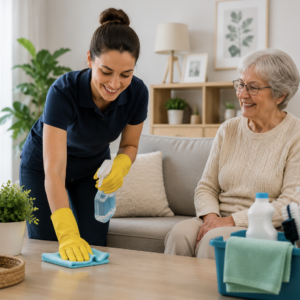
The toilet is one of the most important rooms in the house to keep clean, and one of the least pleasant to do yourself. Whether you’re booking help because of time, health, mobility or disability, it’s worth choosing carefully. A good cleaner doesn’t just make the bowl shine; they stop germs spreading to the rest of your home.
Here are the 10 things to consider before you book, the questions to ask, and the red flags to watch for.
In this guide
10 Things to Consider When Choosing a Toilet Cleaning Service
1. What’s actually included
“Clean the toilet” can mean a quick swish of the bowl or a full top-to-bottom clean. Ask for a written list. A thorough clean covers the bowl, under the rim, the seat (both sides), the lid, the hinges, the cistern and flush button, the outside of the bowl, the base and the floor around it. See the full checklist below.
2. Hygiene practices and cross-contamination
This is the most important question and the one people most often forget to ask. A professional cleaner should use separate cloths, gloves and equipment for toilets and never use the same cloth on your kitchen bench. Many cleaners use colour-coded cloths so toilet cloths are never mixed up with kitchen ones. Ask how they do it.
3. The products they use
Ask what products they bring and whether they can use yours. This matters if anyone in your home has asthma, allergies, sensitive skin or chemical sensitivities. A good provider will happily use low-fragrance options or products you supply.
4. Chemical safety
Some cleaning products are dangerous together. Bleach must never be mixed with acidic toilet bowl cleaners or ammonia-based products, because the combination releases toxic gases. Health authorities such as Health Canada warn these gases can cause breathing problems and can be deadly. A trained cleaner will know this, ventilate the room and use one product at a time.
5. How often they’ll clean
For most households, a weekly professional clean with quick wipe-downs in between works well. Homes with several people sharing one toilet, young children, or continence needs may need cleaning more often. A good provider will suggest a frequency based on your household, not just sell you the biggest package.
6. Worker screening and trust
You’re letting someone into the most private room in your home. Ask how cleaners are screened. NDIS registered providers must make sure workers in risk-assessed roles hold an NDIS Worker Screening Check. Ask private cleaning companies whether they do police checks.
7. Consistency
Having the same cleaner each visit means they learn how you like things done, notice changes and build trust. That matters even more for people living with disability or older people living alone. Ask whether you’ll have a regular cleaner or a different person each time.
8. Insurance
Check the provider has public liability insurance, in case anything is damaged during a clean.
9. Clear pricing
Toilet cleaning is usually part of a bathroom or whole-home clean, charged by the hour or as a fixed price. Ask what’s included in the price, how long they expect to take and whether there are extra charges for heavy build-up, mould or limescale.
10. Communication and feedback
Choose a provider who’s easy to reach, lets you know about changes and asks for feedback after the first visit. Our guide on how to compare home cleaning services covers this in more detail.
Want toilets and bathrooms cleaned properly? Book a home visit or call 0478 534 064.
What a Thorough Toilet Clean Should Include
Use this checklist to compare what different providers offer:
The bowl
- Inside the bowl
- Under the rim
- Waterline stains
- Outside of the bowl
Seat and cistern
- Top and underside of the seat
- Lid and hinges
- Cistern and flush button
- Pipes behind the toilet
Around the toilet
- Base and floor around it
- Walls near the toilet
- Door handles and light switch
- Toilet roll holder and bin
If you use mobility equipment, such as a toilet frame, raised seat or grab rails, ask the provider to include those too. High-touch spots like handles and flush buttons are where germs are most easily passed between people.
Questions to Ask a Toilet Cleaning Service Before You Book
- What exactly does your toilet and bathroom clean include?
- Do you use separate cloths and gloves for toilets?
- What products do you use, and can you use mine?
- How are your cleaners screened?
- Will I have the same cleaner each visit?
- Do you have public liability insurance?
- How do you charge, and what costs extra?
- For NDIS participants: are you NDIS registered, and can you invoice my plan type?
Red Flags to Watch For
- Using the same cloth for the toilet and other surfaces
- Vague answers about what’s included
- Mixing products or using strong chemicals in an unventilated room
- A different cleaner every visit with no handover
- No insurance or no screening
- Prices that are much lower than everyone else’s, which can mean corners get cut
Toilet Cleaning and the NDIS
If your disability makes cleaning difficult or unsafe, cleaning your toilet and bathroom may be funded through your NDIS Core Supports budget under House Cleaning and Other Household Activities (01_020_0120_1_1). The 2026–27 price limit is $60.10 per hour in standard areas.
If your plan is Agency managed, you’ll need a registered provider. You can check registration on the NDIS Commission’s provider register. Our guides to registered vs unregistered NDIS cleaners and NDIS cleaning rates for 2026–27 explain more.
Keeping the Toilet Clean Between Visits
- Close the lid before flushing to help contain spray.
- Keep a toilet brush and a separate cloth just for the toilet.
- Wipe high-touch spots like the flush button and door handle every few days.
- Ventilate the bathroom with a fan or open window to keep humidity and mould down. Our DIY mould cleaning tips can help with problem spots.
- Wash your hands after any cleaning, even if you wore gloves.
Why humidity matters in South East Queensland bathrooms
Brisbane and the Sunshine Coast have humid summers, and moisture builds up quickly in small toilets and bathrooms with poor airflow. That creates ideal conditions for mould on grout, ceilings and around the base of the toilet. If you’re comparing providers in South East Queensland, ask whether their bathroom clean includes checking for and treating early mould spots, and run the exhaust fan during and after showers.
Frequently Asked Questions
What should I consider when choosing a toilet cleaning service?
Check what’s included, how they prevent cross-contamination, which products they use, how often they’ll clean, how workers are screened, whether you’ll have the same cleaner, their insurance and their pricing. NDIS participants should also check registration and invoicing.
How often should a toilet be professionally cleaned?
Weekly suits most households, with quick wipe-downs in between. Busy households or homes with continence needs may need more frequent cleaning.
Can I ask a cleaner to use my own products?
Yes. Most professional cleaners are happy to use your products, which is useful if anyone in the home has allergies or sensitivities.
Does the NDIS pay for toilet cleaning?
It can, when cleaning is reasonable and necessary because of your disability. It’s usually claimed under household tasks in your Core Supports budget.
Is it safe to use bleach on a toilet?
Bleach can be used on its own following the label, in a well-ventilated room. Never mix it with other cleaners, especially acidic toilet bowl cleaners or ammonia-based products.
Book a Trusted Home Cleaner
Humming Home Services is a family-owned NDIS registered provider supporting Queensland homes since 2018. Our screened cleaners take care of toilets, bathrooms and the rest of your home across Greater Brisbane, Toowoomba and the Sunshine Coast, for NDIS participants and private households.
Related reading: How to compare home cleaning services · NDIS cleaners in Brisbane, Toowoomba and the Sunshine Coast · Our cleaning services